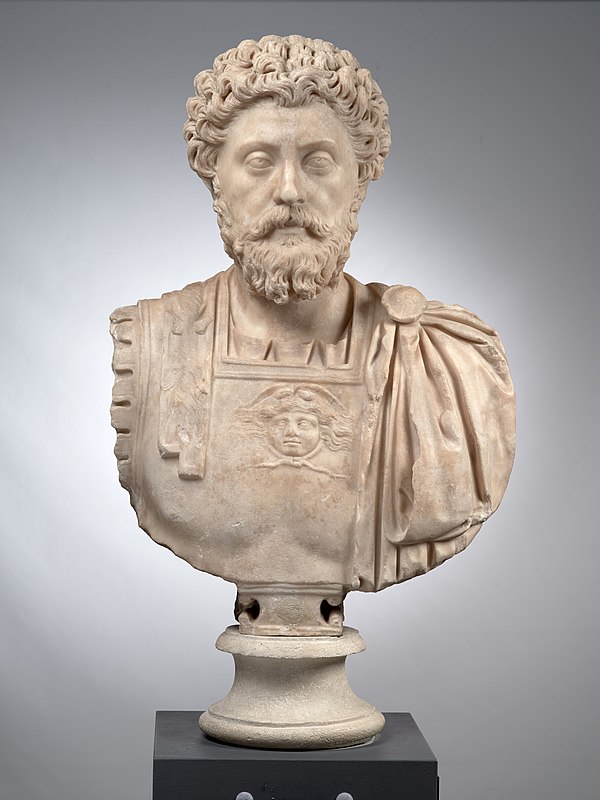
Becoming the Good: The Call to Action in Stoicism
Marcus Aurelius, in his succinct yet profound statement, "Waste no more time arguing about what a good man should be. Be one," invites us to transcend the realm of theoretical discourse and step into the arena of action. This call to embody virtue rather than merely discuss it resonates deeply in a world often mired in debate and indecision. The stakes are high; our character and the essence of our humanity are forged not in idle conversation but in the choices we make and the lives we lead.
In a society that frequently prioritizes opinion over action, Aurelius's words serve as a clarion call to personal responsibility. The essence of Stoicism, which emphasizes the importance of virtue and moral integrity, is encapsulated in this quote. It challenges us to reflect on our own lives and consider how often we find ourselves caught in the web of speculation about what constitutes goodness, rather than actively embodying it. This shift from contemplation to action is not merely a philosophical exercise; it is a transformative practice that can lead to profound personal and communal change.
The image / the metaphor
At the heart of Aurelius's quote lies a vivid imagery that contrasts the futility of argument with the potency of action. The phrase "waste no more time" evokes a sense of urgency, suggesting that deliberation without implementation is a drain on our potential. The verbs "arguing" and "be" create a dichotomy between passive discourse and active existence, urging us to move beyond mere words into the realm of lived experience. This imagery is not just about doing; it is about being—about embodying the very virtues we aspire to uphold.
Diving deeper into the metaphor, we find that Aurelius is not merely advocating for action in a general sense, but for a specific kind of action rooted in virtue. The imperative to "be one" suggests a transformation of self, where our identity is aligned with our values. It implies that goodness is not an abstract concept to be debated but a tangible quality to be manifested in our daily lives. This metaphor invites us to consider how our actions reflect our character and how, in striving to "be one," we can influence the world around us.
In the speaker's tradition
Marcus Aurelius's Stoicism is steeped in the understanding that virtue is the highest good, a concept that aligns closely with the idea of dharma in Eastern philosophies, where one's duty and righteousness guide actions. Just as dharma emphasizes living in accordance with one's true nature and responsibilities, Aurelius's exhortation to "be one" calls us to align our actions with our moral compass. This connection highlights a universal truth across spiritual traditions: that the essence of a good life is found in the practice of virtue, not in its mere discussion.
In his seminal work, "Meditations," Aurelius reflects on the nature of the self and the importance of living in accordance with reason and virtue. He writes, "You have power over your mind—not outside events. Realize this, and you will find strength." This insight complements his quote, reinforcing the notion that our internal state and choices define our character. The Stoic practice of self-examination and mindfulness serves as a foundation for the active embodiment of virtue, encouraging us to cultivate a life that reflects our highest ideals.
Living the teaching
Consider a modern scenario where this teaching can be applied: a workplace filled with gossip and negativity. Employees may spend hours discussing the shortcomings of their colleagues or the inefficiencies of management, yet little is done to foster a more positive environment. Aurelius's call to action encourages individuals to stop debating what a good workplace should look like and instead take initiative—perhaps by offering constructive feedback, supporting a colleague, or fostering open communication. In this way, the act of "being" a good employee transforms the culture of the workplace, demonstrating that individual actions can ripple outward to create change.
In the realm of personal relationships, Aurelius's wisdom can also be profoundly impactful. Imagine a situation where misunderstandings and conflicts arise between friends or partners. Instead of getting caught in a cycle of blame or discussion about what a good friend or partner should do, one can choose to embody the qualities of patience, understanding, and love. By actively listening and responding with compassion, we not only resolve conflicts but also strengthen the bonds of our relationships. This practice of living the teaching emphasizes that our character is revealed in our actions, particularly in moments of difficulty.
A reflection
As we contemplate Marcus Aurelius's powerful exhortation, we are invited to reflect on our own lives: In what areas are we caught in the cycle of debate rather than action? What does it mean for us to "be" the virtues we admire? This contemplation can serve as a guiding question, prompting us to examine our choices and the alignment of our actions with our values. In a world that often prioritizes talk over action, how can we embody the goodness we seek, transforming our intentions into tangible expressions of virtue?


Join the BrightStar Community
Stay connected with daily inspiration, event announcements, and community wisdom