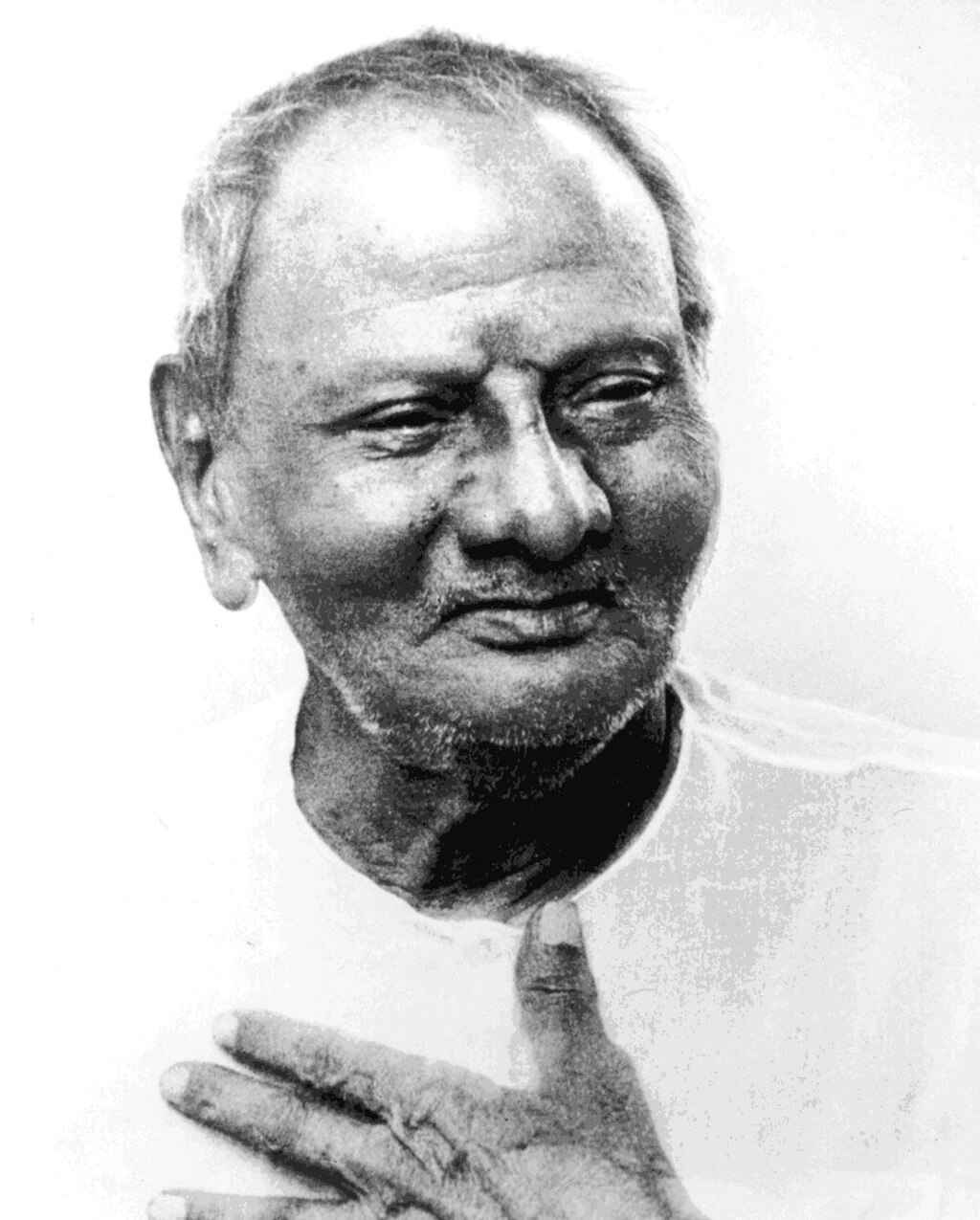
Beyond the Grasp of Thought: Embracing the Ineffable
Nisargadatta Maharaj's assertion that "mind cannot grasp what is beyond mind" invites us to confront the limitations of our cognitive faculties. In a world where we often seek to understand and categorize our experiences, this statement serves as a profound reminder that there exists a realm of existence that transcends intellectual comprehension. The stakes are high; to remain ensnared in the confines of thought is to miss the deeper truths that lie beyond our mental constructs.
This quote challenges us to reconsider our relationship with knowledge and understanding. It beckons us to explore the possibility that true wisdom may not reside in the mind's ability to analyze and dissect, but rather in our capacity to surrender to the unknown. In a culture that prizes rationality and empirical evidence, Maharaj's words resonate as a call to humility, inviting us to acknowledge the limitations of our mental frameworks and to open ourselves to experiences that defy logical explanation.
The image / the metaphor
The imagery in Maharaj's quote evokes a sense of reaching beyond the horizon, where the mind, represented as a vessel of thought, encounters an expansive void. The verb "grasp" suggests an active attempt to seize or hold onto something, yet here it is juxtaposed with the notion of "beyond," indicating that what lies outside the realm of the mind is not something to be captured or contained. This creates a felt sense of tension between our innate desire to understand and the inherent limitations of our cognitive abilities.
Diving deeper into this metaphor, we can envision the mind as a lighthouse, illuminating the shores of our experiences while simultaneously casting shadows into the vast ocean of the unknown. The light may guide us, but it cannot penetrate the depths of the sea. In this way, Maharaj's statement serves as a poignant reminder that there are dimensions of existence—such as love, consciousness, and the essence of being—that elude the grasp of analytical thought. It invites us to embrace the mystery rather than to fear it.
In the speaker's tradition
Nisargadatta Maharaj's teachings are rooted in the non-dual tradition, which emphasizes the unity of existence and the illusory nature of separateness. Concepts such as *sunyata* (emptiness) and *prajna* (wisdom) resonate deeply within this framework, suggesting that the essence of reality cannot be fully articulated through the dualistic lens of the mind. The notion of *kenosis*, or self-emptying, further complements this understanding, as it encourages the relinquishment of the ego's grasp in favor of a more profound connection to the universe.
Living the teaching
Consider a modern scenario where this teaching might resonate: a person grappling with a life-altering decision, perhaps a career change or a relationship shift. In their quest for clarity, they may find themselves overwhelmed by the myriad of thoughts and possibilities, attempting to rationalize their feelings through a mental framework. Maharaj's insight serves as a gentle nudge to step back from the incessant chatter of the mind and to embrace the uncertainty of the situation. By doing so, they may discover that the answer lies not in analysis but in a deeper, intuitive knowing that transcends thought.
In a different context, imagine a couple navigating a challenging moment in their relationship. They may find themselves caught in a cycle of misunderstandings, each trying to articulate their feelings through the lens of their own perspectives. Here, Maharaj's teaching invites them to pause and recognize that the essence of their connection cannot be fully articulated through words or thoughts. By allowing themselves to be present with one another, beyond the confines of their mental narratives, they may rediscover the love that initially brought them together—a love that exists beyond the grasp of the mind.
A reflection
As we contemplate the wisdom embedded in Maharaj's quote, we are invited to reflect on our own experiences of grasping and letting go. What aspects of your life are you trying to understand or control through the mind? In what ways might you benefit from surrendering to the unknown, allowing yourself to experience life beyond the confines of thought? This contemplation opens the door to deeper insights and a more profound connection to the essence of being.



Join the BrightStar Community
Stay connected with daily inspiration, event announcements, and community wisdom